The concepts of “Growth Mindset” and “Fixed Mindset,” introduced by psychologist Carol Dweck, have become foundational in educational psychology and personal development over the past two decades. A growth mindset assumes that abilities and intelligence can be developed through effort, practice, and learning, while a fixed mindset treats abilities as innate and unchangeable.
Since its popularization, these ideas have influenced educational programs, corporate training, and personal development initiatives worldwide. However, from the 2020s onwards, researchers have begun to question the universality and effectiveness of the concept. New studies in 2026 provide a more nuanced view, showing that the impact of mindset depends heavily on context, personality, and social environment.
Evolution of the Concept: From Classic Studies to Modern Critiques
Originally, Dweck’s research focused on experiments with students solving problems of varying difficulty. Children with a growth mindset were more willing to tackle challenging tasks and persisted after failure, whereas children with a fixed mindset often avoided difficult tasks. These findings drove the widespread adoption of the approach in schools, universities, and corporate settings.
Classic growth mindset theory emphasized three key principles:
-
Perception of intelligence as developable: Abilities can grow with effort and practice.
-
Viewing mistakes as opportunities: Failures are interpreted as learning experiences.
-
Focus on effort over talent: Success is the result of persistence and purposeful action rather than inherent ability alone.
However, as research expanded, psychologists began to identify limitations and nuances:
-
Context matters: A growth mindset is not universally effective. In high-pressure or competitive environments, a fixed mindset may help manage stress and avoid burnout.
-
Practical implementation: Simply promoting the idea of growth through motivational posters or workshops rarely produces lasting effects. The impact emerges only when supported by structured learning strategies and consistent feedback.
-
Individual differences: Personality traits, past experiences, and cultural background influence how a person internalizes a growth mindset. Some learners respond better to intrinsic motivation, while others benefit from external reinforcement.
Modern 2026 research proposes a dynamic model, where mindset is treated as a spectrum rather than a binary category, and its effectiveness depends on a combination of factors: personality, environment, task type, and motivation. This approach allows integration of growth mindset theory into broader frameworks of learning, cognitive development, and emotional regulation.
New Critical Research: What Has Changed
Recent studies highlight several important trends in understanding growth and fixed mindsets in 2026:
-
Growth mindset and cognitive load:
Research confirms that a growth mindset helps learners tackle cognitively demanding tasks, but only when they receive structured guidance. For example, programming students with a growth mindset performed better when provided with problem-solving strategies and regular feedback. Without these supports, the effect was minimal.
-
Social context matters:
Growth mindset effects are amplified in supportive environments. Students perform better when mentors help them interpret mistakes as learning opportunities. Conversely, in cultures where errors are stigmatized or not openly discussed, the benefits of a growth mindset are muted. Contemporary studies emphasize that environment can either reinforce or hinder the impact of mindset.
-
The risk of “performative growth”:
The popularity of growth mindset concepts has led to superficial adoption, where people claim to have a growth mindset but do not actually apply it. Researchers call this phenomenon “performative growth mindset,” especially prevalent in corporate training environments where employees verbally endorse principles but do not integrate them into real work.
-
Multi-layered nature of mindset:
Current approaches view growth and fixed mindsets not as personality traits but as strategic tools that can shift depending on context, goals, and emotional state. This explains why an individual may exhibit a growth mindset in learning but a fixed mindset in personal relationships or sports.
-
Connection with emotional intelligence:
New studies show that people with high emotional competence apply growth mindset strategies more effectively. They can interpret mistakes constructively, regulate emotions after setbacks, and adjust their behaviors strategically. Growth mindset, therefore, is closely linked to self-regulation and emotional literacy, not just motivation.
-
Digital learning implications:
With the expansion of online learning, platforms now incorporate growth mindset elements through interactive assignments, adaptive testing, and automated feedback. However, studies reveal that digital tools only enhance mindset effects when users actively engage; passive video watching does not generate sustainable growth.
Practical Applications: Schools, Corporations, and Personal Development
Education
Growth mindset remains a key tool in classrooms, but modern application emphasizes methods and strategies over slogans.
Effective practices include:
-
Formative assessment: Feedback focuses on learning processes rather than outcomes alone.
-
Metacognitive strategy training: Students learn to plan steps, evaluate mistakes, and adjust approaches.
-
Group-based learning: Collaborative discussions allow students to process errors constructively and support each other’s learning.
-
Integration of emotional literacy: Teaching learners to manage frustration, fear of failure, and anxiety enhances growth mindset effectiveness.
For example, students in mathematics courses who received structured reflection exercises and peer collaboration showed significantly higher persistence and performance than those exposed only to motivational messages.
Corporate Environments
Companies use growth mindset frameworks to enhance employee development and productivity. Research emphasizes that mindset adoption is effective only within a supportive corporate culture that values experimentation, learning from mistakes, and long-term development.
Examples of corporate implementation:
-
Mentorship programs with consistent feedback loops.
-
Skill development initiatives where success depends on effort, strategy, and reflection, not only results.
-
Corporate workshops that integrate growth mindset with project-based learning.
Personal Development
On an individual level, growth mindset requires conscious practice. Psychologists recommend strategies such as:
-
Keeping a journal of mistakes and achievements, noting what worked and what did not.
-
Breaking long-term goals into micro-goals to track incremental progress.
-
Regular self-reflection to adjust strategies and mindset application.
-
Seeking feedback from mentors, peers, or colleagues.
For example, someone learning a new language benefits from a growth mindset when tracking progress, analyzing errors, and adjusting study techniques. A vague affirmation like “I can learn this language” without planning and effort is unlikely to produce meaningful results.
Key Takeaways
-
Growth mindset is a spectrum, not a binary trait. Individuals may combine growth and fixed elements depending on context.
-
Effectiveness depends on context. Supportive environments, mentorship, and structured feedback enhance the impact.
-
Practical strategies matter more than motivational slogans. Formative assessments, planning, and metacognitive skills are essential.
-
Emotional intelligence amplifies growth mindset. Awareness and regulation of emotions improve application of mindset strategies.
-
Beware of performative growth. Declaring a growth mindset without actionable steps can create the illusion of progress without real development.
Conclusion
By 2026, the growth vs. fixed mindset framework remains highly relevant but has evolved into a more complex and nuanced model. A growth mindset is no longer treated as a universal solution to success; instead, it is recognized as a dynamic system of strategies that can adapt to specific tasks, personalities, and environmental conditions.
Effective application requires structured approaches, emotional literacy, strategic planning, and environmental support from schools, workplaces, or mentors. When implemented thoughtfully, growth mindset principles foster not only academic or professional achievement but also strategic personal development and resilience.
In modern practice, a growth mindset is not just a motivational catchphrase. It is a tool for conscious learning, self-regulation, and adaptive personal growth, applicable across education, work, and life challenges. Understanding and applying these principles in context ensures that individuals can translate mindset theory into tangible results.
Born and raised with French heritage, our owner brings a unique European flair to his writing. With years of experience, he has honed his skills as a professional copywriter, mastering not only his native French but also English, Italian, a...
More articles by Enthony Ferdinand

 by Enthony Ferdinand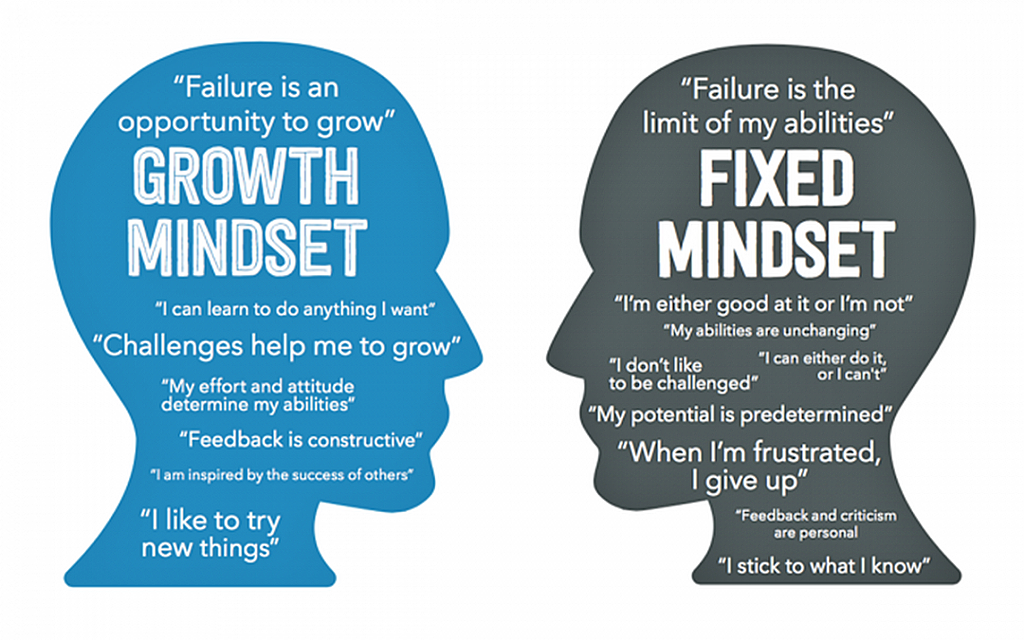


 Enthony Ferdinand
 Get in touch
 July 21, 2026
 views
views