Most students and lifelong learners know that taking notes is important. Yet few realize just how much the method they use affects comprehension, memory retention, and the ability to apply knowledge in real situations. In fact, cognitive research suggests that note-taking is not a passive routine but a core academic skill — one that shapes how we process information and build long-term understanding.
This article explores three of the most influential note-taking systems used today: Cornell Notes, mind maps, and Zettelkasten. Each method emerged from a different educational philosophy, supports different learning goals, and works best for different types of thinkers. Instead of simply describing them, we will examine their deeper logic, compare their advantages and limitations, and help you determine which approach aligns with your personal learning style.
Throughout this guide, our goal is not to declare a single winner. Instead, we aim to help you understand how each method works, why it works, and when to use it for maximum benefit.
Why Note-Taking Matters More Than Ever
Before exploring specific methods, it’s important to understand why note-taking deserves attention in the first place. Many learners assume that notes simply store information. But in reality, they do much more:
Notes shape how we think
The way you take notes determines how you interpret, categorize, and connect ideas. Notes are not only a memory aid — they are a cognitive filter. When you choose what to write down, you are actively constructing meaning.
Notes reduce mental overload
Modern learners face a problem that didn’t exist 30 years ago: information inflation. With unlimited access to articles, videos, research papers, and online courses, we constantly consume more than we can mentally process. A solid method prevents information overload by forcing you to structure, compress, and prioritize.
Notes create a bridge to long-term memory
Studies in cognitive psychology show that summarizing, restructuring, or rewriting information dramatically increases retention. Methods like Cornell Notes and Zettelkasten build these cognitive steps into their structure, turning passive listening into active engagement.
Notes become a personal knowledge library
Some methods — particularly Zettelkasten — are designed to become lifelong resources. Your notes evolve with you, support new projects, and allow you to revisit insights from years past. Instead of one-time study materials, they become a personalized knowledge base.
Notes impact academic performance
Whether preparing for an exam, writing a research paper, or analyzing a complex concept, the quality of your notes directly influences the quality of your work. Good notes make review easier, clarify confusing ideas, and spark new insights.
For these reasons, choosing the right method is more important today than ever before. So let’s explore the three major approaches in depth.
Cornell, Mind Maps, Zettelkasten — How They Work and What Makes Each Special
Cornell Notes: Simple, Structured, and Highly Effective for Academic Learning
Developed in the 1950s by Walter Pauk of Cornell University, the Cornell system was designed to solve a recurring problem: students were taking notes but not reviewing them. The method combats this by dividing each page into three functional areas:
Right column — detailed notes you take during a lecture or reading
Left column — prompts, cues, and questions added afterward
Bottom section — a short written summary
This layout encourages active learning and intentional review. Instead of rereading dense pages of notes, students quiz themselves using the cues, rewrite essential ideas, and test comprehension with the summary.
Cornell Notes work particularly well because they integrate three learning stages:
Capture → Taking notes
Refine → Creating questions and cues
Consolidate → Summarizing the main idea
This makes the method ideal for subjects that require memorization, exam preparation, or understanding structured content. It is especially useful for STEM courses, humanities lectures, and textbook study.
However, its rigid structure can feel restrictive for creative thinkers or learners who prefer non-linear layouts.
Mind Maps: Visual, Associative, and Ideal for Big-Picture Thinking
Mind maps, popularized by Tony Buzan, begin with a central concept. From there, you draw branching lines that represent ideas, examples, categories, processes, or relationships. Colors, icons, and illustrations are often added to make the map more expressive.
Mind maps work because they mimic how the brain naturally organizes ideas: through networks rather than lists.
They are especially effective for:
brainstorming
planning writing assignments
understanding complex systems
exam revision
connecting ideas that don’t follow a strict sequence
Visual learners often find mind maps significantly more intuitive than traditional notes. Instead of linear text, they see structure and relationships at a glance.
Yet mind maps have limitations. They are not ideal for dense factual material, complicated formulas, or subjects that require detailed step-by-step explanations. They also become messy if the topic is too large.
Still, for synthesizing ideas, generating creativity, or grasping the overarching logic of a subject, mind maps remain one of the most effective tools available.
Zettelkasten: A Knowledge System for Deep Thinkers, Writers, and Researchers
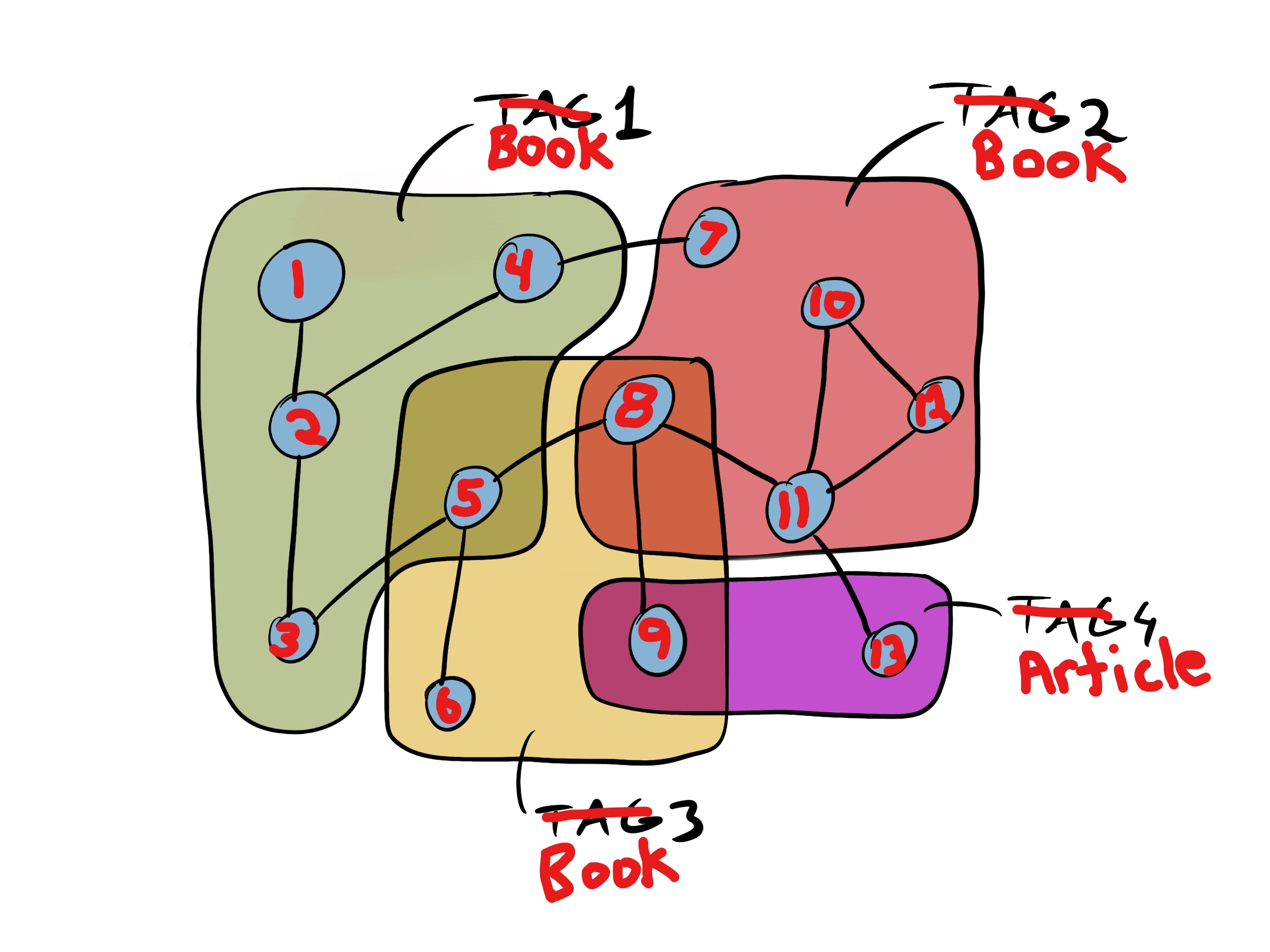
Unlike Cornell Notes or mind maps, Zettelkasten isn’t a page layout — it’s a full knowledge management philosophy. Originating from the work of German sociologist Niklas Luhmann, it is based on creating “atomic notes,” each containing one idea. These notes are then linked to others through references, forming a growing knowledge network.
The power of Zettelkasten lies in:
atomicity (one idea per note)
connections (notes linked through meaningful associations)
emergence (new insights arise from the network over time)
Zettelkasten is not designed for quick study sessions. Instead, it is ideal for:
research projects
academic writing
long-term learning
synthesizing knowledge across disciplines
turning reading into usable intellectual resources
Its biggest advantage is that it prevents knowledge loss. Instead of piling notes into forgotten folders, Zettelkasten encourages continuous review, rewriting, and linking — the very activities that deepen understanding.
Its downside is the time investment and discipline required. Zettelkasten is not a casual method; it is a long-term intellectual commitment.
Comparison Table: Strengths, Weaknesses, and Best Use Cases
Method
Strengths
Weaknesses
Best For
Cornell Notes
Highly structured; encourages review; ideal for exams
Long-term knowledge building; supports research and writing; encourages deep understanding
Time-consuming; requires consistent maintenance
Researchers, writers, thinkers, lifelong learners
How to Choose the Method That Matches Your Mind
Selecting a note-taking method is not about following trends — it is about understanding how you learn. Here are some guiding questions:
Do you need structure and clarity?
Choose Cornell Notes. You’ll benefit from a predictable layout and built-in review process.
Do you think visually or conceptually?
Choose mind maps. This method helps you see relationships quickly and understand the big picture.
Do you learn slowly but deeply, connecting ideas across time?
Choose Zettelkasten. This method turns isolated facts into evolving knowledge.
Do you use notes for exams or short-term projects?
Cornell Notes or mind maps will serve you well.
Do you write, research, or produce long-form content?
Zettelkasten is your strongest option.
Can you combine methods?
Absolutely — many people do.
For example:
take Cornell Notes during class,
create a mind map for revision,
transform the key insights into Zettelkasten notes later.
This hybrid strategy offers the structure of Cornell, the clarity of mind maps, and the long-term value of Zettelkasten.
Putting the Methods Into Practice
Regardless of which method you choose, effective note-taking requires intention. Here are practical tips that work across all systems:
Write less — but think more
Your notes should not be a transcript. They should reflect understanding, not repetition.
Review early and often
Research shows that reviewing notes within 24 hours dramatically improves retention.
Use active cues and questions
Especially in Cornell Notes, writing questions transforms passive notes into self-testing tools.
Visual touches help memory
Even in text-based notes, small diagrams, arrows, or color coding make information more memorable.
Link ideas whenever possible
This is central to Zettelkasten but useful in any method. The more connections you build, the deeper your comprehension.
Rewrite unclear notes
Clarity is more important than completeness. A clean, edited note is more useful than a cluttered one.
Personalize the system
Don’t treat any method as rigid rules. Adapt layouts, colors, and digital tools to your thinking style.
Conclusion: The Best Method Is the One That Helps You Learn — Not the One That Looks Perfect on Paper
Cornell, mind maps, and Zettelkasten each offer something unique:
Cornell Notes support organization, review, and exam success.
Mind maps unlock creativity and big-picture thinking.
Zettelkasten fosters deep understanding and knowledge growth over time.
There is no universal “best” method. The real question is: Which method helps you think better, remember more, and apply information effectively?
For some learners, a structured page is the key. For others, it’s visual connections. For others still, the long-term evolution of a knowledge network.
Ultimately, your note-taking method should match your goals — whether you want to excel in classes, master a complex subject, or become a clearer thinker. With intentional practice and a willingness to experiment, any of these systems can become a powerful lifelong tool.
In today’s educational environment, students face increasing demands. The volume of information continues to grow, learning timelines accelerate, and independent work has become critical for success. In this context, one of the most essential factors for effective learning is self-regulated learning (SRL) — a student’s ability to manage their own learning process, set clear goals,…
Modern students face high levels of academic stress, driven by curriculum demands, deadlines, exams, and competition. Chronic stress negatively affects cognitive functions, motivation, and overall mental health. In recent years, research in psychology has highlighted the importance of emotional regulation — the ability to manage emotions and adapt to stressful situations — as a key…
Project-Based Learning (PBL) has emerged as one of the most effective educational strategies in recent decades. Unlike traditional teaching methods, where students primarily listen to lectures and take tests, PBL places learners at the center of the process: they solve real-world problems, create projects, and apply knowledge in practice. This approach not only boosts motivation…




 February 21, 2026
 views
views