In today’s world, education is no longer just about accumulating facts and knowledge. Employers and educational experts increasingly emphasize that success in careers and personal life depends on skills that allow adaptability, effective collaboration, and informed decision-making. By 2026, skills such as critical thinking, self-management, data literacy, and communication will be especially in demand. Understanding their importance and developing them alongside formal studies is becoming a key factor in a student’s competitiveness.
Why Skills Matter More Than Knowledge Alone
Historically, educational systems focused on knowledge transfer: memorizing formulas, dates, and concepts was considered the foundation of learning. In the industrial era, this approach made sense: professions changed slowly, and fundamental knowledge ensured long-term stability.
Today, the situation has changed drastically. Technology, globalization, and a dynamic labor market create constant change. New professions emerge faster than curricula can adapt. In this context, knowledge becomes transient, while the ability to think critically, adapt, and apply information effectively is far more valuable.
For instance, students with strong critical thinking skills can quickly grasp new concepts and evaluate their relevance. Self-management skills help balance work, studies, and personal projects. Data literacy allows analysis of large information volumes and decision-making based on evidence, while communication ensures effective collaboration both in teams and on the job market.
Critical Thinking and Analytical Skills
Critical thinking is the ability to analyze information, compare it with evidence, identify connections, and draw well-reasoned conclusions. In education, it manifests in tasks requiring argumentation, comparative analysis, and synthesis of information.
Examples of Development
In mathematics and physics, students learn to test hypotheses, construct proofs, and assess the validity of solutions.
In social sciences, critical thinking helps evaluate sources, identify biases, and build logical arguments.
In programming and IT, it supports assessing algorithm efficiency and suggesting optimal solutions.
Outside of academics, these skills help individuals resist manipulation in media, evaluate risks, and make strategic decisions. By 2026, employers will increasingly expect students not just to know facts but to apply them flexibly and thoughtfully.
Self-Management: Planning and Responsibility
Self-management involves more than time organization—it’s the ability to set priorities, maintain motivation, and manage stress effectively. In a high-pressure environment with a constant flow of information, this skill is critical.
Practical Methods
Using calendars and planners to organize studies and projects.
Breaking larger tasks into smaller steps to reduce overload and increase productivity.
Regular reflection: analyzing successful and unsuccessful outcomes to improve approaches.
Example: a student juggling coursework, an internship, and a personal project, using self-management techniques, can complete tasks on time, maintain motivation, and learn from mistakes, fostering responsibility and autonomy.
Data Literacy: Understanding and Using Information
In the digital era, information surrounds us constantly. The ability to interpret, analyze, and use data effectively is increasingly important. Data literacy involves:
Reading and interpreting charts, graphs, and reports.
Critically evaluating data sources and identifying errors.
Applying statistical insights to make evidence-based conclusions.
Examples of Application
In business and economics: market analysis and strategy evaluation.
In medicine: interpreting clinical data and research results.
In marketing: understanding audience behavior using analytics.
Data literacy equips students and professionals to make decisions based on evidence rather than intuition, reducing errors and improving outcomes.
Communication and Teamwork
No matter how skilled a person is, knowledge and abilities are ineffective without the ability to convey them. Communication includes verbal and written expression, listening skills, and empathy. Academically, it manifests in group projects, presentations, and debates.
Examples
In engineering, students collaborate on projects, share ideas, and coordinate tasks.
In humanities, presentations and debates enhance reasoning and confidence.
In startups and IT, effective communication ensures successful implementation of ideas.
Strong communication skills make students more adaptable and marketable, especially in environments where collaboration and problem-solving are essential.
Key Takeaways
Skill
Why It Matters
Examples of Application
Critical Thinking
Enables analysis and evaluation of information
Science, IT, Sociology, Economics
Self-Management
Organizing time, priorities, and responsibility
Studies, internships, personal projects
Data Literacy
Working with data to make informed decisions
Business, medicine, marketing
Communication
Effective teamwork and presentations
Projects, startups, research
Flexibility
Adapting to change and new conditions
Any future profession
Self-Learning
Ability to learn independently
Online courses, new technologies, skills
Conclusion
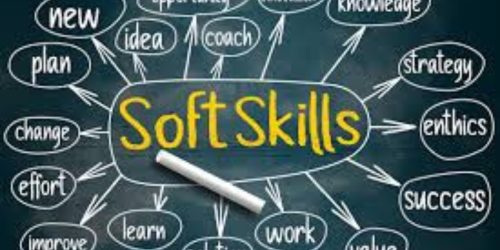
Developing soft skills is more critical than ever. By 2026, critical thinking, self-management, data literacy, and communication will determine the success of students and young professionals. These skills should be cultivated alongside formal education through practical projects, teamwork, and independent learning. Mastering them not only provides a competitive edge in the job market but also builds the capacity to adapt effectively in a rapidly changing world.
In the era of information overload, the ability to critically evaluate sources has become essential for students and young researchers. Scientific and popular publications vary widely in quality, and the rise of misinformation makes distinguishing reliable research from fake or misleading studies a critical skill. Understanding how to assess credibility, methodology, and context not only…
In today’s world, education is no longer just about accumulating facts and knowledge. Employers and educational experts increasingly emphasize that success in careers and personal life depends on skills that allow adaptability, effective collaboration, and informed decision-making. By 2026, skills such as critical thinking, self-management, data literacy, and communication will be especially in demand. Understanding…
Graduation marks the end of formal schooling, but learning doesn’t stop there. In fact, it’s just the beginning of a lifelong journey. Today, more than ever, continuous learning is crucial for personal growth, career advancement, and adapting to a rapidly changing world. But how do you make learning a habit that lasts decades? How can…



 December 17, 2025
 views
views